
What Are the Different Types of Clean Room Classes and Standards?
What is a Cleanroom?
Dust and microbes ruin expensive manufacturing projects. If your facility fails a GMP inspection, you lose money and time. A cleanroom fixes this exact problem.
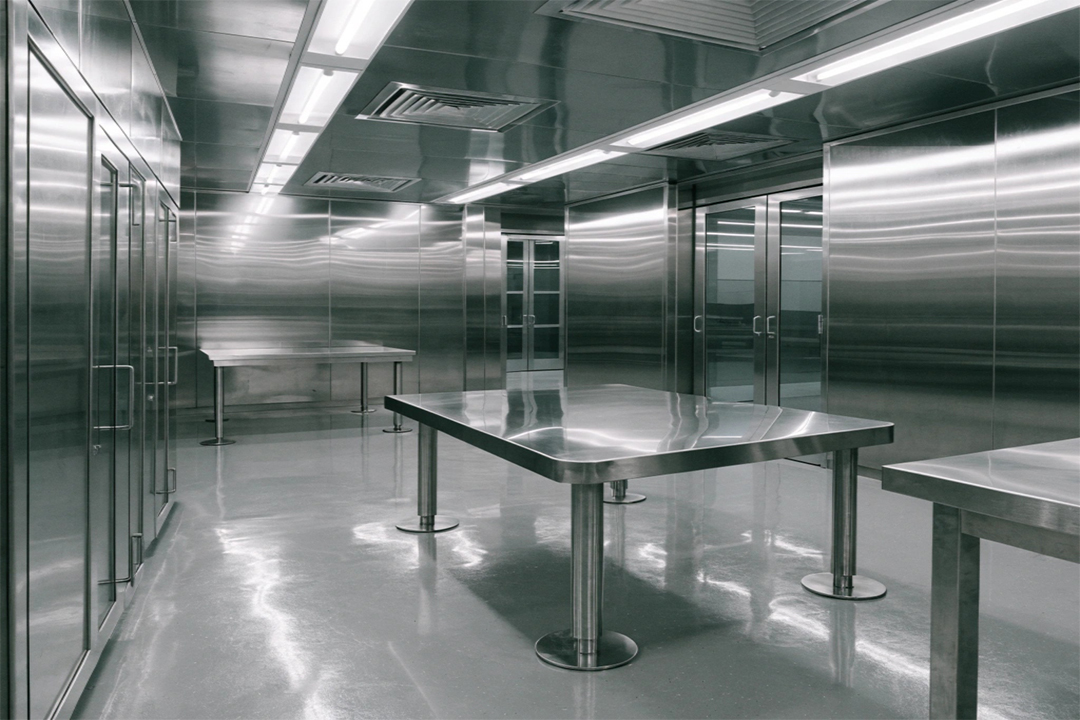
A cleanroom is a highly controlled environment designed to keep airborne particles, dust, and microbes at extremely low levels. Industries like pharmaceuticals and semiconductor manufacturing use cleanrooms to protect sensitive products from contamination during production.
You might think a standard clean space is enough for your project, but strict industries demand exact numbers and proof. Keep reading to see how we measure and classify these critical environments.
What is a Cleanroom Rating?
Building a cleanroom without knowing its rating leads to failed audits. You risk installing the wrong equipment and ruining the whole project. Let us look at how ratings work.
A cleanroom rating is a specific standard that defines the maximum allowed number of particles per cubic meter of air. It tells you exactly how clean the room is, ensuring the space meets strict industry rules for safe manufacturing.
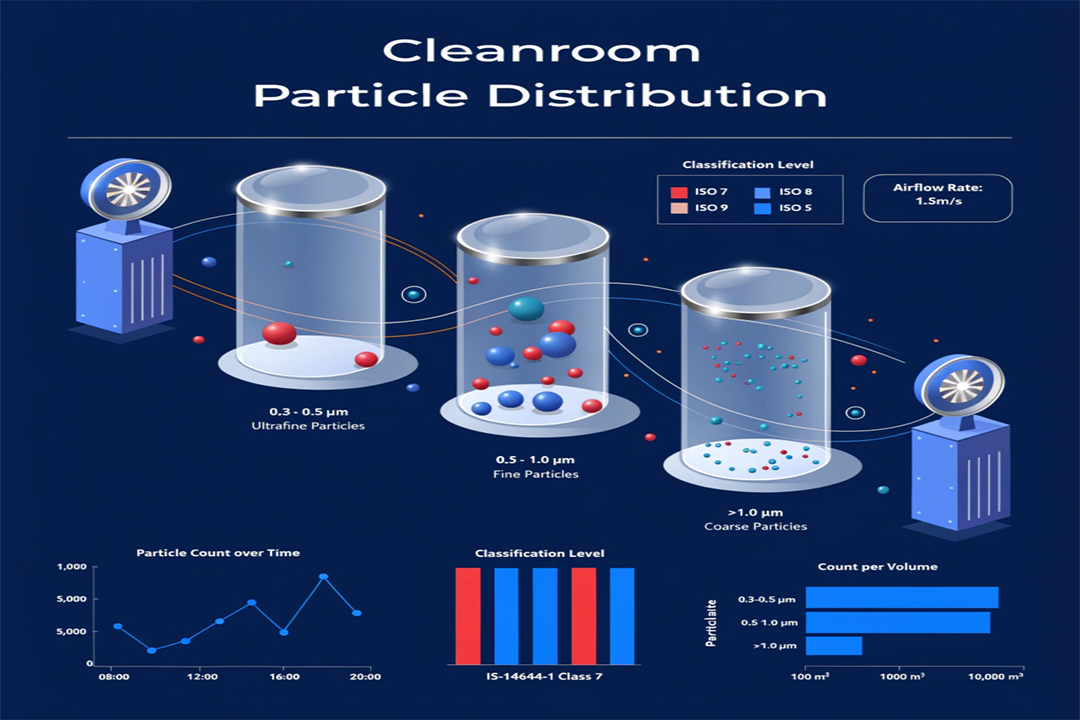
When I work with project managers, they always ask how to prove their room is clean enough. You cannot just guess. You must measure the particles in the air.
How Ratings Work
A rating system looks at particle size and particle count. We use a machine called a particle counter. It pulls in air and counts the tiny pieces of dust or skin inside. If the number is too high, the room fails the test.
The Role of Stainless Steel Equipment
Your cleanroom rating directly affects the equipment you buy. At AGIRAY, we design our stainless steel furniture to help you keep your rating. If you use cheap, standard cabinets, they will trap dust and shed particles. This ruins your rating. We use premium SUS304 or 316L stainless steel. We polish every surface to an exact Ra value.
| Rating Factor | Bad Equipment Effect | AGIRAY Solution |
|---|---|---|
| Particle Shedding | Peeling paint adds dust | Solid SUS304/316L stainless steel |
| Cleaning Limits | Rusts from strong chemicals | Anti-corrosive, easy to wipe down |
| Airflow Blockage | Bad shapes stop clean air | Custom 3D designs fit the room |
When you know your rating, you can buy the right equipment the first time.
What are the different classes of cleanrooms?
Choosing the wrong cleanroom class wastes your budget. A room that is too clean costs too much, while a dirty room ruins products. You must pick the right class.
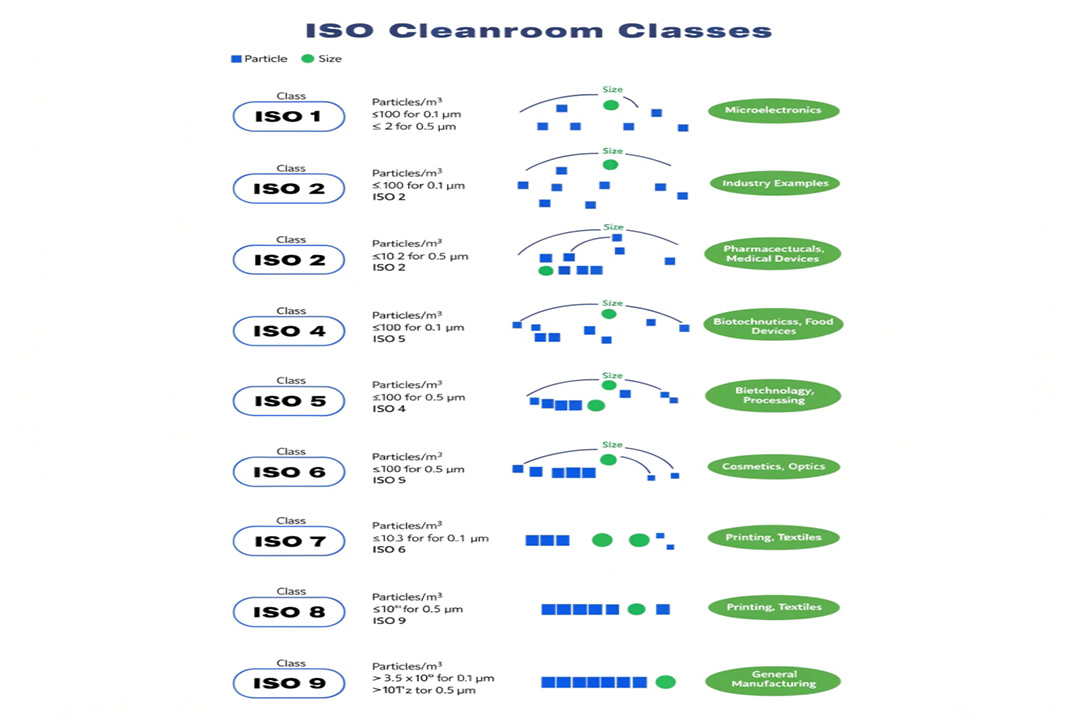
Cleanrooms are divided into different classes based on how many particles they allow. The most common systems are the ISO classification, ranging from ISO 1 to ISO 9, and the older Federal Standard 209E, which uses classes like Class 100 or Class 10,000.
In my 20 years in the purification industry, I have seen many companies struggle with cleanroom classes. They either overbuild or underbuild. You need to know the difference to protect your profit margin.
The Main Systems
Most of the world uses the ISO system today. But many engineers still talk about the old US Federal Standard 209E. You must understand both so you can talk to your clients and suppliers clearly.
Matching the Class to the Industry
Different jobs need different classes. A computer chip factory needs a much cleaner room than a food packaging plant.
| Cleanroom System | Highest Cleanliness | Lowest Cleanliness | Common Use Case |
|---|---|---|---|
| ISO 14644-1 | ISO 1 | ISO 9 | Global standard for all new projects |
| FS 209E | Class 1 | Class 100,000 | Older system, still used in US talk |
| GMP (Pharma) | Grade A | Grade D | Making medicines and vaccines |
If your client needs a Grade A pharmaceutical cleanroom, you must use equipment with fully rounded edges and seamless welds. Standard sharp edges will trap dirt and cause the room to fail its class test. We always check the target class before we start cutting the steel.
Why are ISO Cleanroom Ratings Important?
Failing to meet ISO standards leads to rejected products. Your clients will not pay if your room fails the final inspection. ISO ratings protect your reputation.
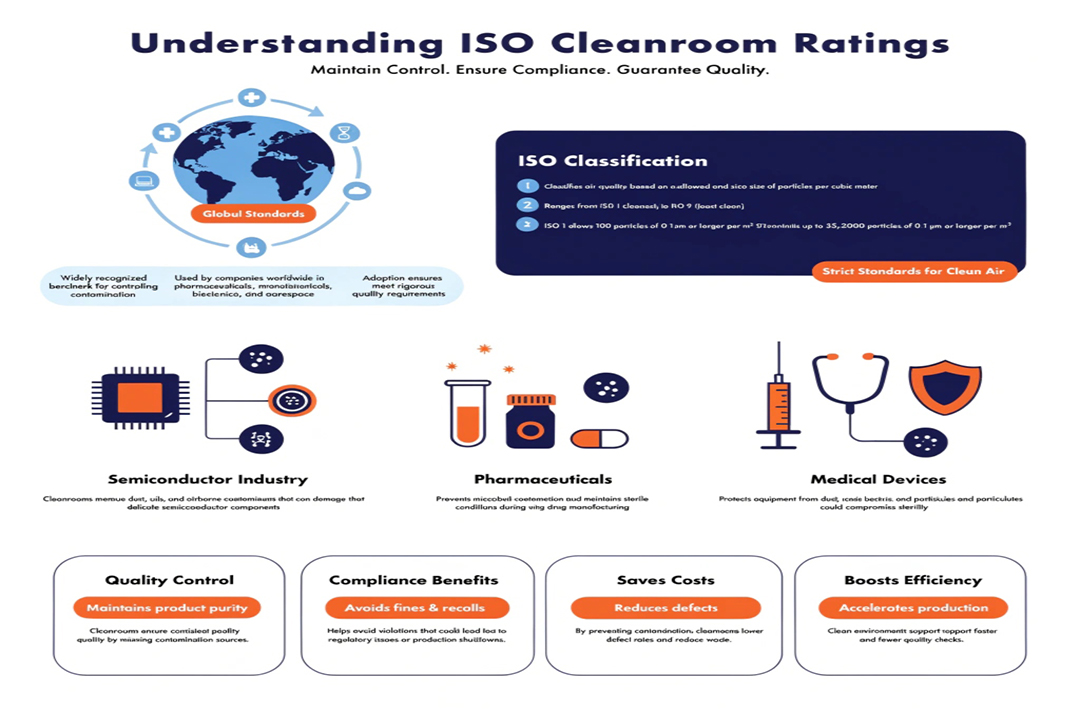
ISO cleanroom ratings provide a universal standard for quality control. They ensure that facilities around the world meet the same strict cleanliness levels. This protects sensitive products from contamination, helps companies pass GMP audits, and keeps final consumers safe.
%[why ISO cleanroom ratings are important](http://agirayfab.com/wp-content/uploads/2026/04/develop-an-infographic-that-explains-the-significa.jpg
"why ISO cleanroom ratings are important")
When I talk to overseas buyers, they care about one thing: no defects. ISO ratings give them confidence. Without ISO ratings, the word "clean" means nothing at all.
A Global Language
ISO ratings give us a shared language. If a buyer in Germany orders equipment for an ISO 5 room, my factory in China knows exactly what they need. We know we must use automated polishing lines to get the perfect surface smoothness. This global standard stops mistakes and arguments.
Protecting the Supply Chain
Cleanrooms are expensive to build. EPC contractors build them to make money. If the room fails the ISO test, the contractor pays a huge penalty.
| Reason ISO is Important | Impact on Your Business | How We Help |
|---|---|---|
| Quality Control | Stops bad products | 6-Step QC process in our factory |
| Legal Compliance | Passes government audits | Material Test Reports for every batch |
| Cost Control | Avoids rework and fines | Zero dimensional errors with 3D CAD |
You must respect the ISO ratings. They are the rules of the game in high-end manufacturing. We build our stainless steel furniture to help you win that game.
What Are the Different ISO Cleanroom Classes?
Mixing up ISO levels causes disaster. If you put ISO 7 equipment in an ISO 4 room, the whole room fails. Let us break them down.
The ISO classification ranges from ISO 1 to ISO 9. ISO 1 is the cleanest possible environment, allowing almost zero particles. ISO 9 is basically normal room air. Most industrial cleanrooms fall between ISO 4 and ISO 8, depending on the product they make.
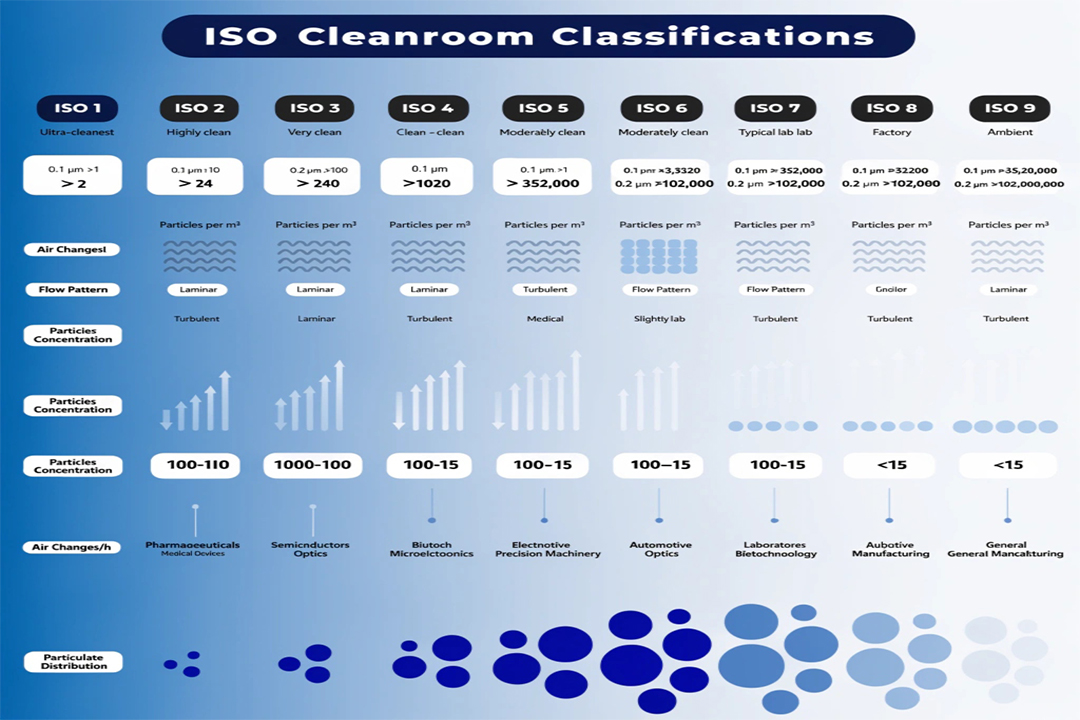
I always ask my clients for their exact ISO class before we quote a price. You must know the rules for each level to buy the right tools.
The Strict End: ISO 1 to ISO 5
These rooms are for semiconductors and strict biotechnology. They allow very few particles. For these rooms, we only supply top-tier SUS316L stainless steel equipment. Every weld must be completely smooth. We use high-power laser cutters to make sure every part fits perfectly.
The Standard End: ISO 6 to ISO 8
These rooms are for normal medical devices, food processing, and cosmetics. They allow more particles, but they still need strict control. SUS304 stainless steel works well here.
| ISO Class | Max Particles (0.5µm) per m³ | Typical Industry | Equipment Needs |
|---|---|---|---|
| ISO 3 | 35 | Nano-technology | Ultra-smooth 316L, no flat surfaces |
| ISO 5 | 3,520 | Pharma Grade A | Seamless welds, electropolished |
| ISO 7 | 352,000 | Medical Devices | Standard SUS304 lockers and sinks |
| ISO 8 | 3,520,000 | Food Packaging | Easy-to-clean washbasins |
Picking the right class tells you what to build. Our engineering team looks at your ISO class and gives you the exact design you need to pass your test.
Conclusion
A cleanroom uses strict ISO ratings to stop contamination. When you know your class, we provide the perfect custom stainless steel equipment to help you pass any inspection.
Written by

Comments
You may also be interested in:

Selecting Appropriate Cleanroom Stainless Steel: 304 vs 316 vs 304L vs 316L?
Choosing the wrong metal cause