


Selecting Appropriate Cleanroom Stainless Steel: 304 vs 316 vs 304L vs 316L?
Choosing the wrong metal causes rust and ruins your cleanroom. You face failed inspections and lost money. I will help you select the exact stainless steel for your furniture.
You should select 304 stainless steel for general cleanroom furniture like lockers and shoe cabinets. You must use 316, 304L, or 316L for high-moisture or chemical areas. The "L" stands for low carbon, which stops rust around welds on your custom cleanroom equipment.
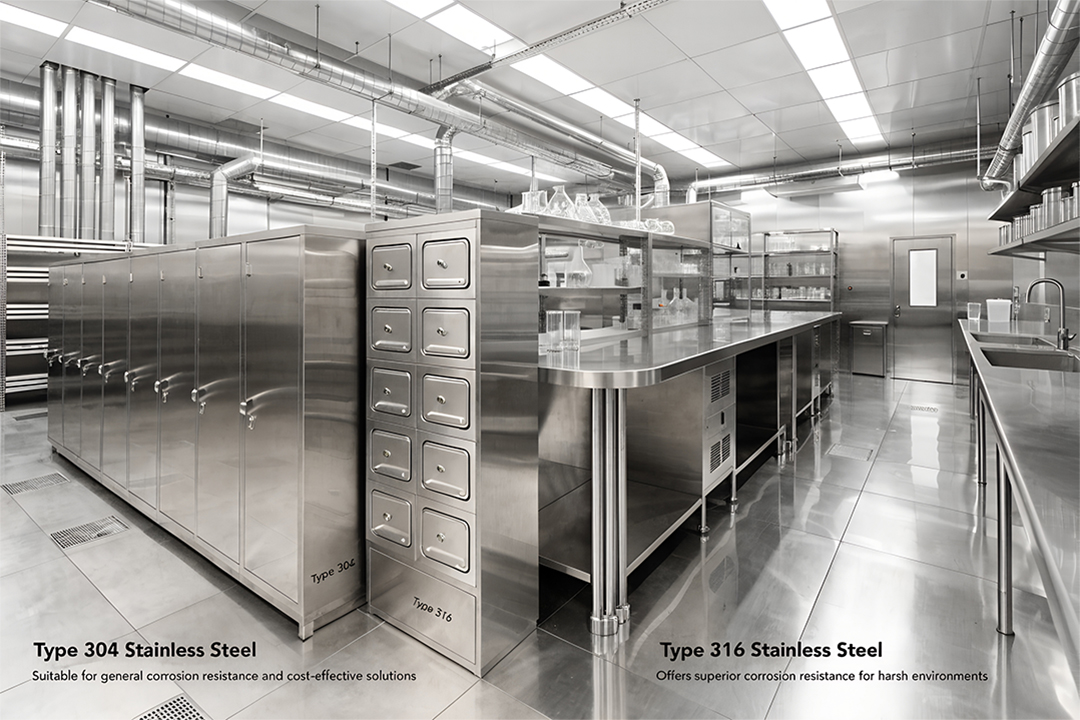
I see project managers struggle with this choice every day. If you want to stop replacing rusted cabinets and pass your GMP inspections easily, you must understand these metal grades. Let us look closely at the different types of stainless steel below.
What grade of stainless steel for cleanroom?
You need cleanroom furniture that lasts. Cheap materials cause contamination and delay your project. I will explain which stainless steel grades meet strict GMP standards.
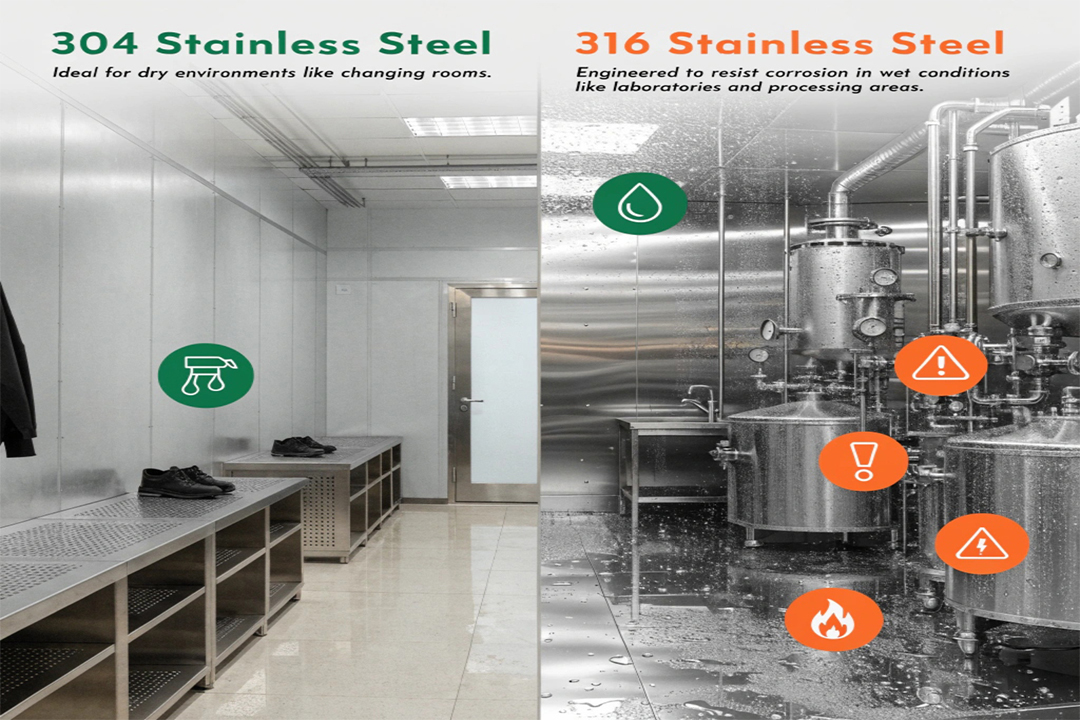
Cleanrooms require 304 or 316 grade stainless steel. You can use 304 for dry areas like changing rooms and standard workstations. You must choose 316 for wet labs, chemical washing stations, and areas that use harsh cleaning agents.
Matching Grades to Cleanroom Furniture
I always tell my EPC contractor clients to match the metal grade to the specific room environment. You do not need the most expensive metal for every single item. You need the right metal for the right job.
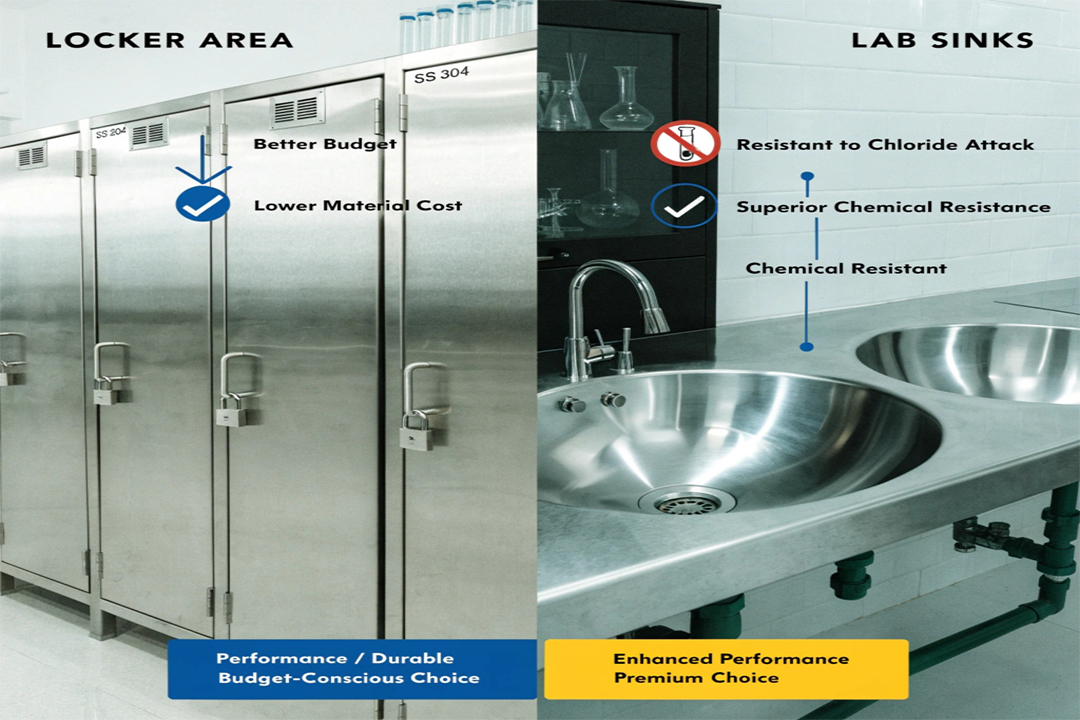
For example, a gowning room stays mostly dry. You can safely use 304 stainless steel for shoe cabinets, lockers, and gowning benches. It resists basic wear and looks great. However, if you need a washbasin or a chemical storage cabinet, the environment changes. These areas face constant moisture and harsh cleaning chemicals. Here, you must upgrade to 316 stainless steel.
Let us break down the standard choices for cleanroom furniture:
| Furniture Type | Recommended Grade | Reason for Choice |
|---|---|---|
| Gowning Lockers | SUS 304 | Dry environment, cost-effective, easy to clean. |
| Shoe Cabinets | SUS 304 | Handles basic dust and dirt well. |
| Washbasins | SUS 316 | Resists rust from constant water exposure. |
| Chemical Carts | SUS 316 | Survives harsh acids and strong disinfectants. |
You must avoid 201 stainless steel completely. Some cheap suppliers try to hide 201 steel in their products to save money. This metal will rust very fast in a cleanroom. I always provide a material test report for our AGIRAY furniture to prove we use genuine 304 or 316 steel. This guarantees your clients will pass their GMP inspections on the first try.
Which is better, 304L or 316L stainless steel?
Welded joints often rust first on custom furniture. This weak spot ruins the whole product. I will show you how low-carbon grades solve this exact problem.
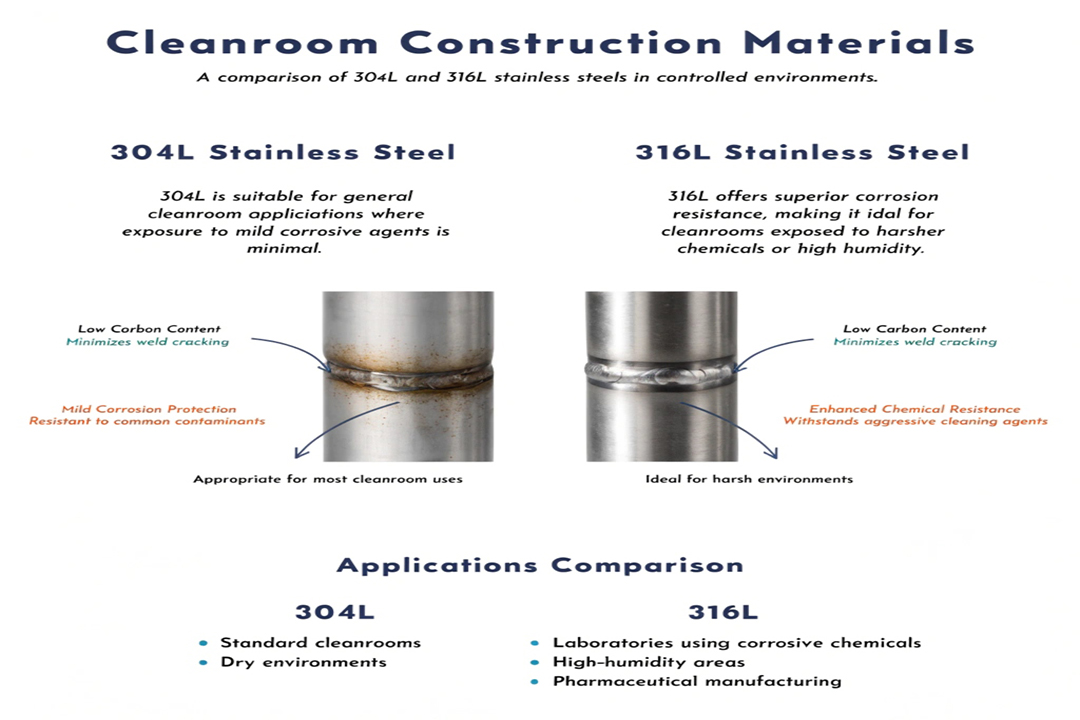
316L stainless steel is better than 304L because it contains molybdenum. This added element gives 316L extreme resistance to chemical corrosion. Both 304L and 316L have low carbon content, which stops rust from forming around welded joints on your custom furniture.
Understanding Low Carbon for Welding
Many buyers ask me what the "L" actually means. It stands for "Low Carbon." When we build non-standard custom furniture, we must weld many metal pieces together. Regular 304 or 316 steel can lose its rust protection during high-heat welding. This creates a weak spot at the joint. The low carbon grades fix this problem.
If you buy a highly customized lab workstation with many complex welded seams, you want an "L" grade metal. But you still must choose between 304L and 316L. The choice depends on the chemicals in the room.
304L vs 316L Comparison
| Feature | 304L Stainless Steel | 316L Stainless Steel |
|---|---|---|
| Carbon Content | Very Low (under 0.03%) | Very Low (under 0.03%) |
| Chemical Resistance | Good | Excellent (contains Molybdenum) |
| Best Application | Large welded storage racks | Complex welded chemical hoods |
| Cost | Moderate | High |
I see overseas buyers worry about consistent quality. They hate when expensive custom cabinets arrive with rusty welds. When we manufacture products at AGIRAY, we use CNC precision cutting and expert seamless welding. We often recommend 304L for large, dry storage racks and 316L for complex wet-area carts. The low carbon content ensures the metal stays strong and clean after welding. This attention to detail protects your brand reputation.
Which is better SS 304 or SS 316?
Paying too much for steel wastes your project budget. Buying cheap steel causes inspection failures. I will help you balance cost and quality for your cleanroom furniture.
SS 316 is better for fighting corrosion because it has added molybdenum. SS 304 is better for your budget. You should choose SS 316 for harsh chemical areas and marine environments. You should choose SS 304 for general cleanroom furniture to save money without losing basic quality.
Balancing Budget and Performance
Every project manager faces tight budgets. You want to make a profit, but you cannot sacrifice quality. If you build a large cleanroom facility, you will need hundreds of lockers and shoe cabinets. If you use SS 316 for all these items, you will destroy your budget.
SS 304 is the industry standard for most cleanroom furniture. It is tough, easy to clean, and resists normal water exposure. I always advise clients to use SS 304 for their main changing room facilities.
However, you cannot use SS 304 everywhere. If your client produces strong pharmaceuticals or uses aggressive chlorine-based cleaners, SS 304 might start to pit or rust. SS 316 handles these harsh conditions perfectly.
Making the Final Choice
| Condition | Winner: SS 304 | Winner: SS 316 |
|---|---|---|
| Project Budget | Highly cost-effective | More expensive |
| Daily Cleaning | Normal wiping and dusting | Harsh chemical washdowns |
| Common Furniture | Lockers, changing benches | Lab sinks, acid cabinets |
At AGIRAY, we act as problem solvers for your site. We help you mix and match these metals. We can build your dry area furniture with SS 304 and your wet area equipment with SS 316. This strategy keeps your costs low and ensures your entire project passes final GMP inspections easily.
Conclusion
You must match your stainless steel grade to the cleanroom environment. Use 304 for dry furniture and 316 for wet areas to guarantee passing your GMP inspections easily.
Written by

Comments
You may also be interested in:

What Are the Different Types of Clean Room Classes and Standards?
What is a Cleanroom? Dust and
